Lower your bills in Brussels while doing good for the planet
Updated on September 17, 2026 by Pierre
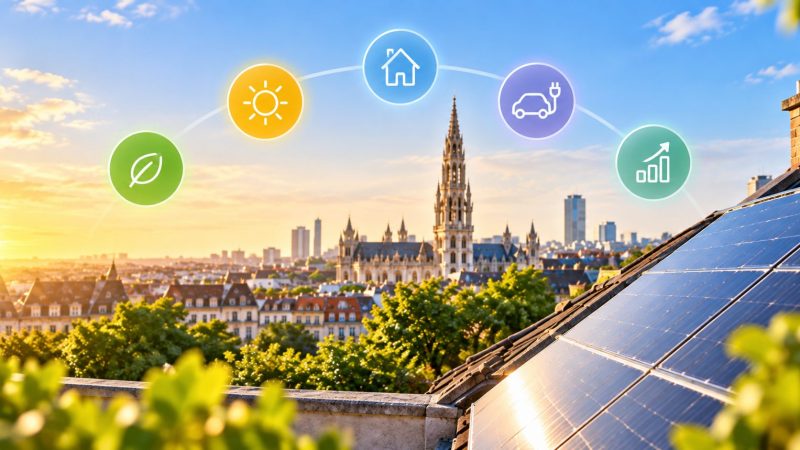
We often feel like we have to choose between our wallet and our environmental convictions, as if the two were inherently incompatible. But in real life, and especially for those living in Brussels , some of the most financially beneficial actions are also those with the least impact on the planet. We've listed the three that, in our case, have truly made a difference, both in terms of our bills and our conscience.
💧 Rainwater, the resource that we let flow down Brussels gutters
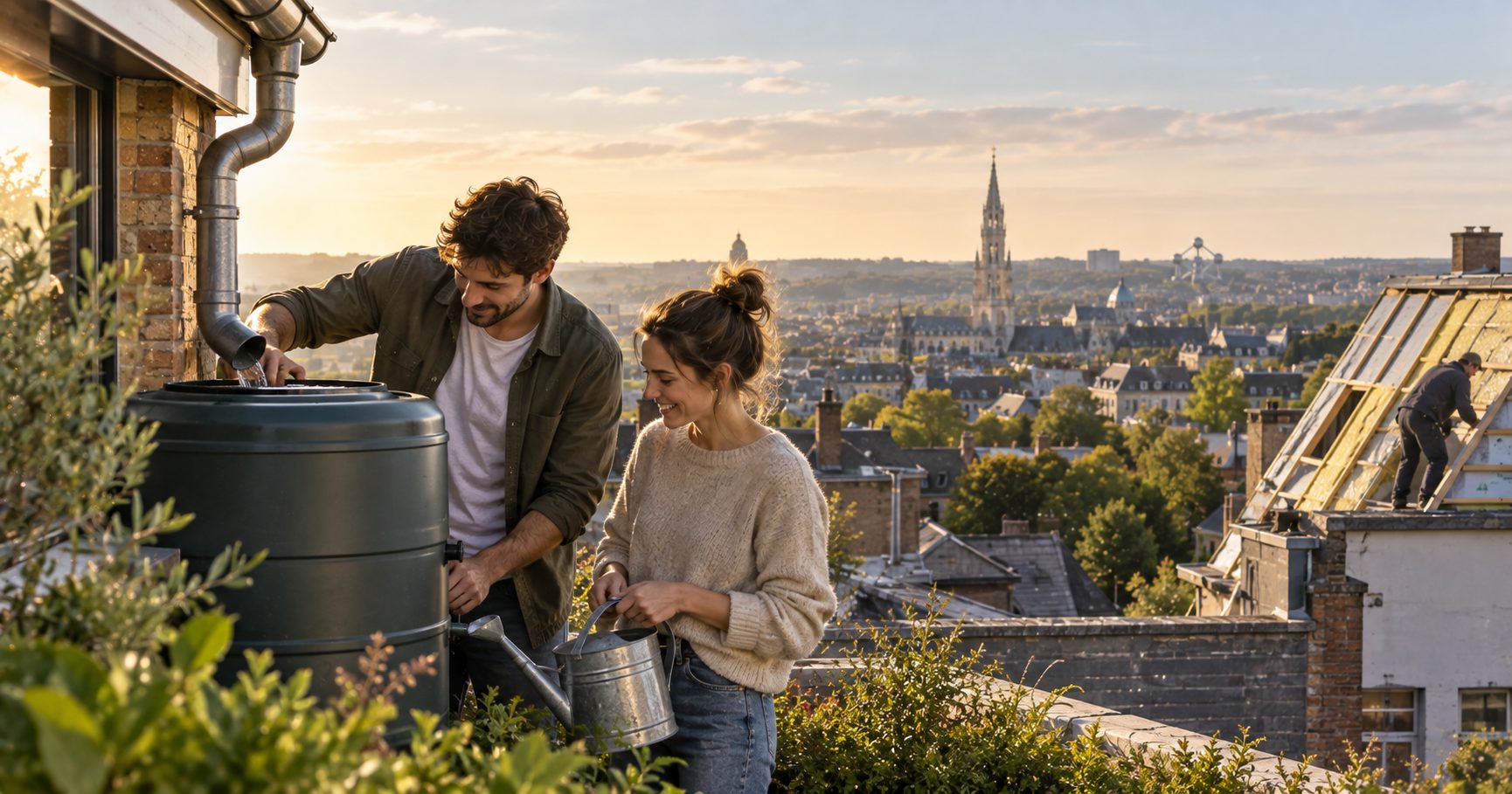
Every year, thousands of liters of rainwater fall freely on the rooftops of Brussels, and most of it ends up directly in the sewer without having served any purpose. Meanwhile, drinking water, treated with considerable energy and chemicals, is used to… flush toilets. Installing a rainwater harvesting tank stops this waste at its source, a particularly relevant measure in Brussels where periods of heavy rainfall increasingly alternate with drought. In practical terms, this involves a septic tank , the vessel that collects and stores the water, available from Bouwdepot in various sizes depending on the household.
Financially, a family of four saves around €215 per year simply by flushing their toilets with rainwater instead of tap water. But the impact goes beyond the wallet: less groundwater is drawn, less drinking water is wasted on unnecessary uses, and the pressure on Brussels' water network is reduced during the increasingly frequent dry summers.
🏠 Insulating your roof: a step that also saves… CO2

We often think of insulation in terms of comfort and energy bills, but we too often forget the climate dimension. A poorly insulated roof means up to 30% of the heat produced by heating literally escapes into the atmosphere, for nothing. In other words, it's gas or heating oil burned to no avail, with the accompanying CO2 emissions—a sensitive issue in a city like Brussels, which aims for carbon neutrality in its building stock by 2050 (the new Energy Performance Certificate (EPC) requirements remind every owner of this).
Glass wool, or glaswol as it's called in Flanders, remains one of the most affordable solutions for insulating attics or lofts, with a significant environmental impact: it's largely made from recycled glass, and its lifespan easily exceeds 40 years. Bouwdepot offers a wide selection of glaswol suitable for roofs, walls, and floors—a considerable advantage for Brussels' often older buildings, where attics remain the number one weak point. The savings are both in euros (€300 to €500 in annual savings for a house heated with gas) and in emissions avoided, since every degree of heating saved means less fossil fuel burned.
🧱 Hollow walls, the energy blind spot
The third step is probably the least visible, but not the least effective. Many Brussels houses built before the 1980s, especially those rows of terraced houses typical of the capital, have hollow walls that have never been insulated since their construction, an empty cavity that lets heat escape continuously, winter after winter.
Injecting insulation into this cavity from the outside can further reduce energy bills by 10 to 15% (an average of €150 to €250 per year), while also reducing the amount of fossil fuel consumed to heat a house that otherwise primarily heats its exterior walls. In Brussels, this type of work can also benefit from regional energy renovation grants.
🌍 The real calculation: euros saved, energy not wasted
What makes these three actions so appealing is that they don't require sacrificing comfort; quite the opposite. No one is being asked to lower the heating to 16°C or take two-minute showers: it's simply about stopping wasting what we're already paying for. Combined, these three investments represent savings of 600 to 900 euros per year and a significant reduction in the consumption of fossil fuels and drinking water for Brussels households, without compromising comfort.
To further develop a renovation project, a visit to Batibouw , the major Belgian construction and renovation fair, allows you to compare solutions and meet professionals before embarking on the project.
And perhaps that's the real good news: the actions that are good for the planet are, most of the time, exactly the same as those that are good for the bank account, even in a city as dense as Brussels.

Barely a foot in the Belgian capital, Pierre launched “InsideBrussels.be” more than 10 years ago, the idea is simple: “What to do? Where to go to eat or have a drink? “. Entrepreneur at heart, this is not his first project! Far from there. EatLocal.io; KingCard.be, Bricabrac.be … Like wine, with time the project improves!
Pierre does not hesitate to share his favorites and his best addresses of Brussels restaurants that he could recommend to you with his eyes closed.